The 23rd Hour Blog

Migrations, analog and digital. 

In my lifetime, I have gone through many migrations in different senses of the word.

In the most literal sense, I migrated from Canada to Mauritius only as an infant. In young adulthood, I migrated back to Canada to study. Soon after graduating, I found myself migrating again, this time further west to California. And now I am migrating again, out of California. Migration is full of unknowns, but unknown possibilities often outweigh known impossibilities.

April 2025 in Death Valley, CA. I wonder what it was like for people to come across this terrain for the first time during a migration, before there were pictures or guides. It must have been as terrifying as it was beautiful.

Another type of migration has been that of my digital life. You’ve probably gone through such migrations too, changing emails, social media platforms and the like.

The first blog I ever had was on a site called Mauritius Interactive. It was by and for Mauritians. You basically had your home page which you could customize with HTML, could embed a background song in, and post whatever you like. What was cool was that you kind of knew everyone IRL and their digital footprint only augmented your understanding of who they are. Those were the days.

Fun fact: did you know that “blog” is short for “weblog”?

Simultaneously, I had MSN Messenger, ICQ, mIRC (a Mauritian IRC) and soon after Hi5 and MySpace. In the early ’00s, all of those either became defunct or deserted for the likes of Facebook. After much prodding from friends, I joined Facebook. Facebook Notes became another place for my long form posts.

Soon after, I came across Blogger, and started a blog there, which I would update sporadically throughout my university years. I did fool around with Tumblr for a bit but it never stuck. Ultimately though, no platform stuck as much as Facebook. Soon it was embedded so deeply into my social life that I am still, years later, trying to extricate myself from its grip.

I’m not sure why I didn’t get into Wordpress sooner, but I eventually did around 2017. By then, blogs were already starting to feel a bit passé but when you love writing, those things aren’t going to stop you. That said, something about Wordpress feels very old school in all the worst ways. While it does allow for a lot of customization, it’s not my favorite. I use it for my podcast still, but decided to move away from it for my music website.

Then I discovered Medium. I liked the clean look. During 2020, I found a lot of great writing on here, and I learned so much. My inbox was full of thoughtful pieces written by people who were at the forefront of social movements. Spending time here excited me because I was surrounded by great writing. So I migrated again. A few of my pieces written here have had my largest audience to date. However, the engagement was relatively low. It’s hard to tell how many people actually are resonating with what I write since so few interact even though the posts were shared a bunch. I also found the way publications worked rather clumsy. Soon though, the publications I was subscribed to here closed up shop. I found little incentive to spend much time here as more and more of my time was spent making the podcast and fewer of the updates coming to my inbox interested me. Medium had become full of really bland corporate productivity hack posts.

Then, since 2022, I started seeing great think pieces again, this time on Substack. I really did hesitate for a long time. Do I really want to join another blogging platform? Yet, everyone I knew whose work I admired was slowly cropping up there. It was reaching critical mass. People were subscribing and paying the authors they like. It seemed like the first blogging platform to make paid subscriptions mainstream for writers, much like Patreon did for musicians. One of the attractive features was that it had the equivalent of a blog roll, which seemed like a good way to grow organically with your friends. What’s a writer to do? I created my Substack last year after encouragement from some marketing friends and am still trying to find my footing there.

When you’re a creator, there’s a constant push and pull between doing what you want and meeting your audience where they’re at — or rather, going where the audience is. I still don’t have the answers. But I do know that I need to focus on one platform at a time, so for now, that place will be Substack. It is free to subscribe, and there’s an option to upgrade to a paid subscription if you wish — totally optional though. If you’ve enjoyed my writing here, I hope you will join me for the next leg of the adventure as well.

Sala kahle (Stay well).
What are cis-straight folks supposed to do during Pride Month? 

When I started nuancespod.com I knew very few people from the queer community. But given the podcast’s goal was to showcase diverse experiences in the Asian diaspora, I made it a point to seek out queer voices as well. About 25% of my guests have been from the queer community and I have learned so much from my conversations with them.

For example, I learned that in the gay community, “no fats, no fems, no Asians” is something people actually put on their dating profiles. Some people will not even have a conversation with Asian gay men. I was shocked. Asian women are often fetishized, but Asian men are emasculated, and even more so in the gay community.

Other guests told me how religion was a hurdle for their family to embrace their queerness. They spoke about how it felt like their parents were committing to not knowing them fully, instead choosing to ignore or just tolerate the parts they don’t understand, and how much that still hurts their relationships.

I also learned that for many in the queer Asian community, coming out is not an option unless they’re willing to risk losing everything. Because in many of our Asian cultures, family is everything. In Chinese culture especially, there is this concept of the entire family “losing face” when someone in the family does something that is considered taboo by the rest of the community. They shared how isolating it was to be at a family dinner and not have anyone stand up for them when a bigoted uncle made hurtful comments.

Still others told me how their parents wanted to be supportive but wrestled with the idea of foregoing a heterosexual marriage, and continuing the family lineage.

In many cases, my guests told me how they felt so alone as kids, thinking that their experiences were unique to them, thinking there was something wrong with them. Some were even told it was a sin to be who they are. What a horrible thing for kids to internalize.

But it was not all bad. I also heard their stories of queer joy. Having the support of an ex-spouse and kids through transition. Finding love. Giving themselves permission to be themselves. Wearing makeup when they feel like it. Creating a culture of consent in the queer community. I wondered what it would mean for queer Asian youths to have access to more wholesome queer stories that are culturally relevant to them?

In addition to continuing to highlight people from the queer community, I also wanted to provide a broader historical context that shows that these stories are not outliers. Why are our “Asian cultures” so homophobic and transphobic today? Has it always been this way? Do our queer Asians have queer ancestors? If so, what was it like for them?

One day, I came across a video on TikTok about a 1651 play written by Li Yu, titled “The Fragrant Companion”. It was a story of two women who were madly in love with one another. They got their happy ending by marrying the same man in a polygamous marriage. If this was a hit play in 1651, what other stories are out there that we don’t know about?

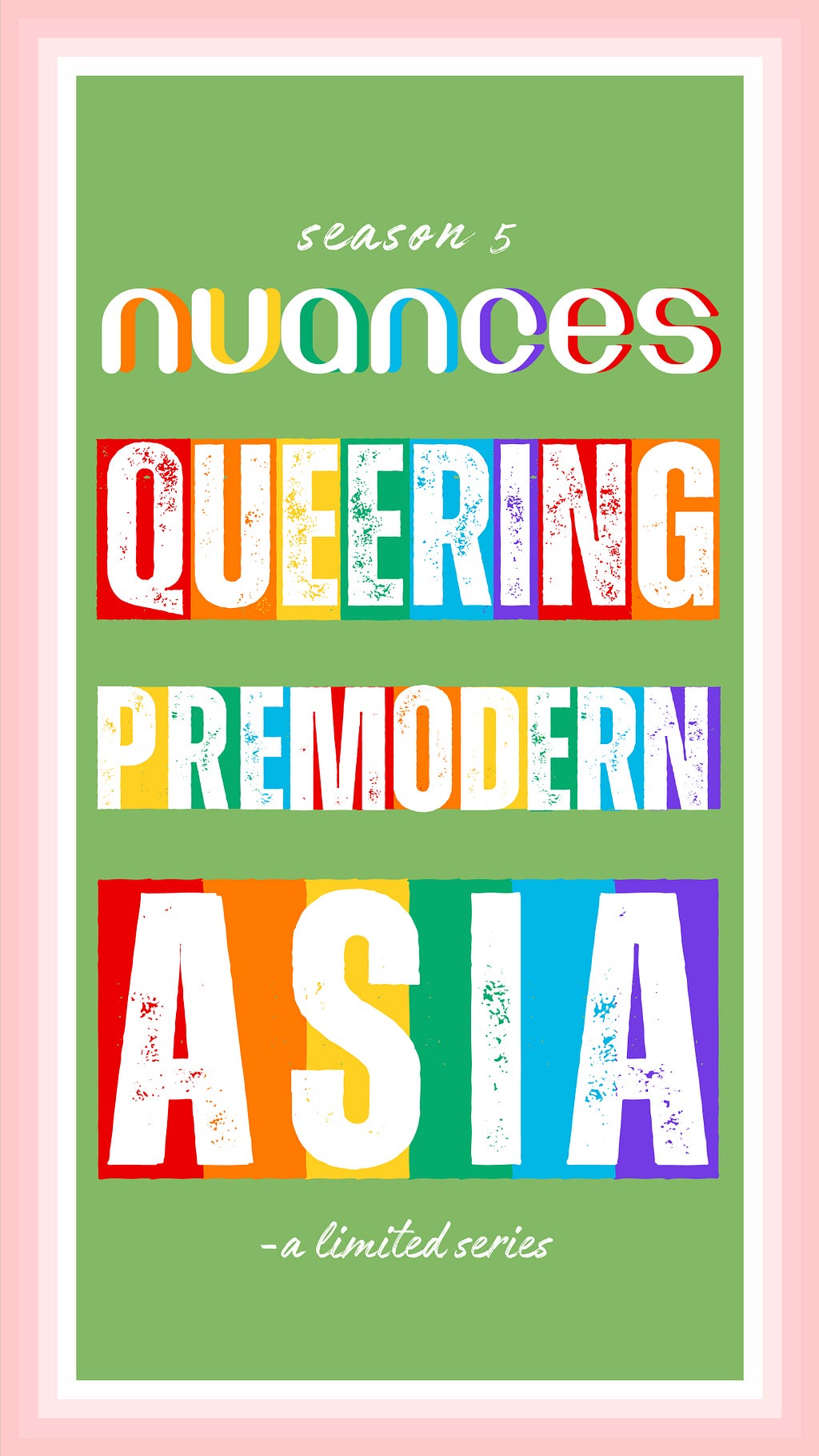
I set out on a quest to find more stories of premodern queerness across Asia, and after 10 months of research and development, I am so proud to present “Queering Premodern Asia”, a limited series.

Here’s an audio introduction to what the series is about:

‎Nuances: Our Asian Stories: S5: Queering Premodern Asia - Ep.0 - An Introduction on Apple Podcasts

Each episode features narrated stories, comments from scholars, and discussions with a queer Asian co-host. It it was important for me to include queer voices in the series and, unsurprisingly, every guest co-host brings so much more nuance to the conversation than I could ever as a cis straight woman.

So, what are cis-straight folks supposed to do during Pride Month? Same as they’re supposed to do every other month. Be curious. Be a good friend. Have compassion. Engage with people who have different experiences from you and listen. Rather than buying a rainbow themed coffee cup from a corporation, it might be more impactful to ask the community how to help. If you don’t know any queer folks and you’re not sure where to start, but are somewhat curious about history and culture, I hope you’ll consider starting with this series!

Queering Premodern Asia

  1. In search of Prince Charming…and his king! (OUT NOW)
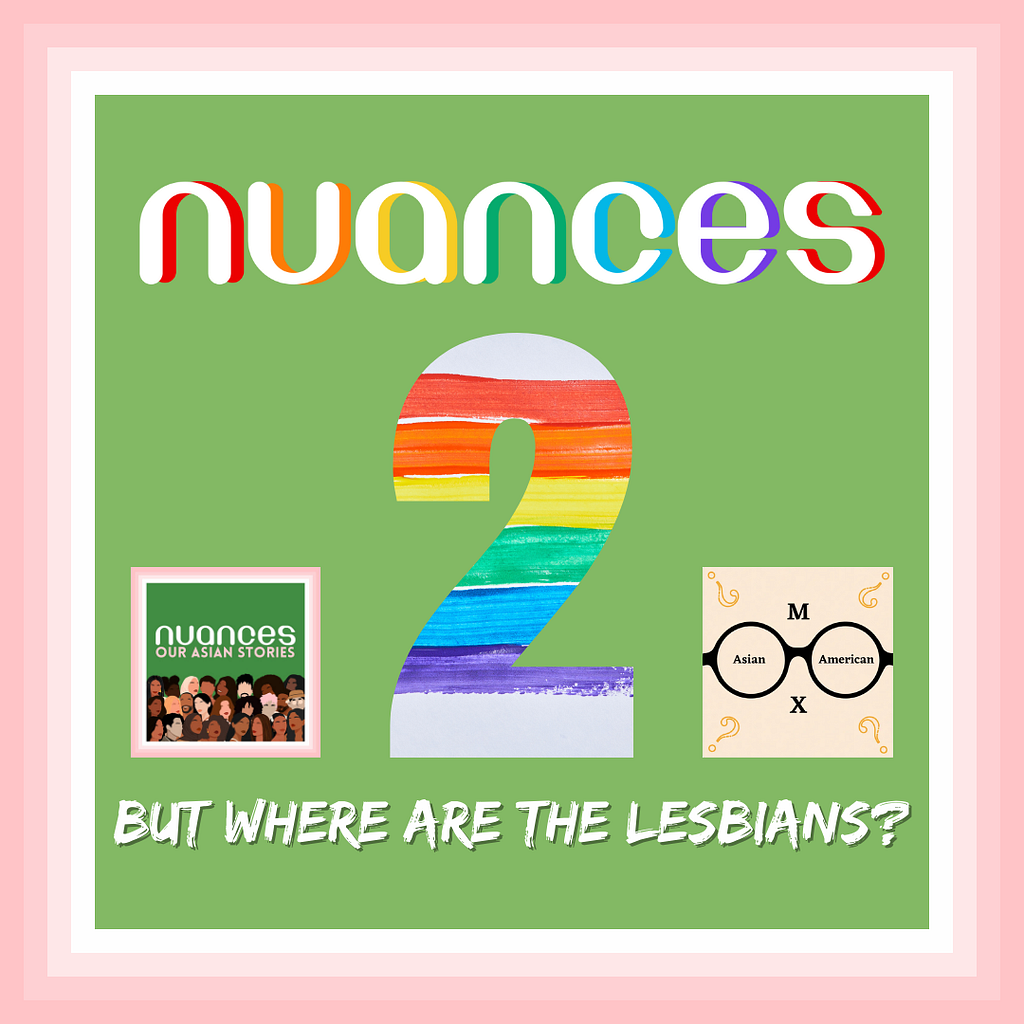
  2. But where are the lesbians? (OUT NOW)
  3. 50 shades of gender. (coming 6/30/24)
  4. Love, marriage & their casual relationship.
  5. Gods, sex & the patriarchy.
  6. The West: savior or demonizer?
  7. Gender bender.
  8. For the record.
  9. In search of the socially acceptable.

Interviews with the queer community

About 25% of my interviews have been with the queer community. You can find the full list here. In particular, I’d like to highlight the Trans Day of Visibility feature episode (S4E7), a wholesome trans story that both emphasizes the need for support for gender affirming care, and highlights a shining example of how that support can help someone thrive, and bloom again.

‎Nuances: Our Asian Stories: S4 E07: Trans Day of Visibility special with Cece Chow & her son Gideon - the wholesome Asian trans representation you needed to hear. on Apple Podcasts

Help Mauritius survive Wakashio — a guide for the Mauritian diaspora and visitors. 

Help Mauritius 🇲🇺 survive Wakashio — a guide for the Mauritian diaspora.

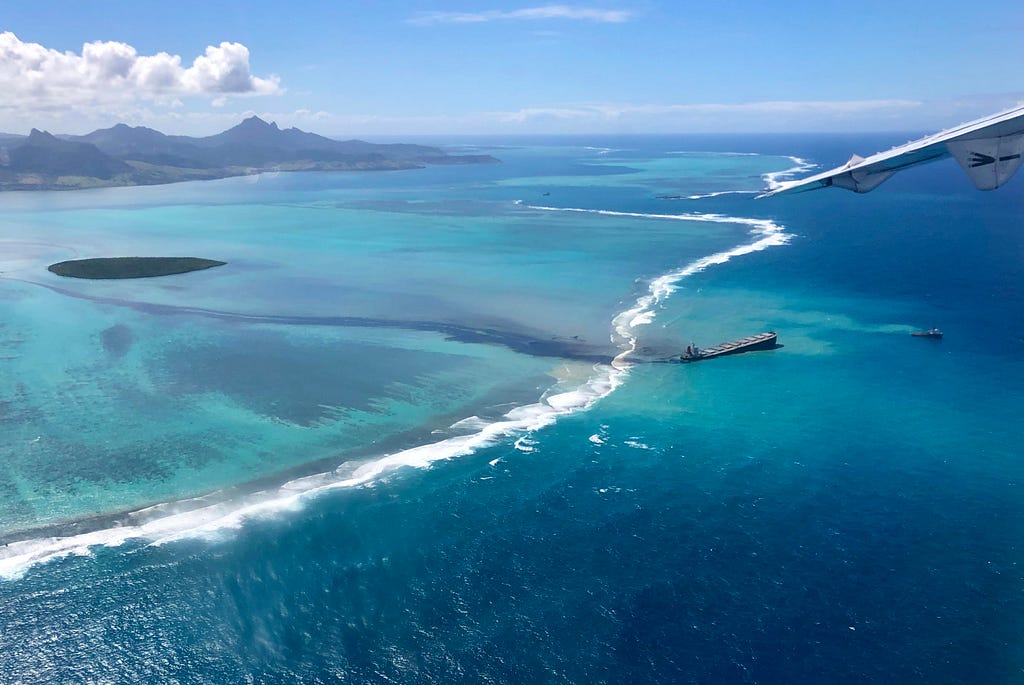
Fuel leaking from the cargo ship, spilling into the marine park lagoon. Photo by Eric Villars

It is hard to watch helplessly as the dark fluid oozes onto our favorite shade of blue. Here are four ways to help meaningfully from afar.

Our motherland, Mauritius, went from obscurity to being a prominent fixture of international news in a matter of days. Everyone has heard of the Wakashio oil spill by now. The latter endangers our biodiversity, food supply, and tourism industry. The economy was already in the tank from COVID-19. It’s hard to even fathom the consequences of this crisis.

That said, the sheer magnitude of Mauritian solidarity has restored my faith in humanity — a faith most recently corroded by anti-maskers and white fragility. Folks from all walks of life have come together, creating and installing barriers to contain the oil slick. I have never been the patriotic kind, but seeing these harmonious images and videos all over my feed made me proud. As a Mauritian, I felt compelled to mobilize from afar.

If you’re an (ex-pat or a visitor who loves our island), you are probably feeling helpless, wishing you were there to help clean up our beloved ocean. So did I. Although I donated to the NGOs, I still felt like there had to be more I could do. Then I got an idea that I hope you will deem worth sharing:

“What if ex-pats like us could help local businesses get back on their feet by sponsoring them to support cleanup sites?”

1. Sponsor locals to help — two birds, one stone

I have several family members who are restaurateurs. COVID-19 saw their businesses unable to operate fully for months. Despite the reopening, the mandatory mask policy has put a damper on social dining. It’s a tough time to own a small family business. Yet, in spite of it all, my relatives are still volunteering their time and helping create bagasse-filled barriers to contain the oil spill.

I decided to help by sponsoring one of their restaurants to prepare and deliver lunch for the 200 volunteers at a cleanup site. That way, they get some business while still directly helping the cleanup efforts. Everybody wins. I connected them with an Eco-Sud organizer and it is happening this Wednesday!

I estimate it will cost between 550–600 USD for the 200 lunches I am sponsoring. If you earn a living in a stronger currency than the MUR, a sponsorship is likely more affordable to you to than it is for a local. If you can’t afford that amount, maybe you can get a few friends or relatives to pool money together to support your favorite Mauritian restaurant/snack for one day.

If enough of us do this over the next few weeks, we will have created quite a lot of income for local restaurants and helped volunteers clean up our ocean from afar. Let’s help our paradise get back on its feet and emerge stronger from this tragedy.

How to sponsor a cleanup site lunch.

  • Contact your favorite local restaurant/snack/laboutik in Mauritius.
  • Offer to pay them to prepare and deliver food/drinks to Eco-Sud volunteers. Set a budget (say ~ Rs100 per person). If they cannot deliver, maybe you can find someone to help on the Wakashio Facebook group.
  • If they are on board to help, get in touch with Eco-Sud via Facebook to decide which day/site, and how many volunteers are to be thanked with a meal. If you don’t want to use Facebook, email me and I will give you the phone number for the volunteer I talked to.
  • You can foot the bill yourself or get friends and relatives to pitch in. PayPal is available in Mauritius to facilitate transactions. You’ll be helping both the economy and the ecology.

Not just food & drinks — other sponsorship ideas.

This can also be done for stores and businesses that could offer other materials needed for the cleanup.

  • Businesses selling masks, gloves/boots/diving gear/ other PPE to minimize exposure to the toxic fuel.
  • Businesses selling needles, nylon thread, or material to make the sausages.
  • Businesses selling heavy duty containers to store the fuel.
  • The list is endless. Contact Eco-Sud/MWF and ask them what they need, then sponsor it. It’s quite simple, and there is a lot of work to be done. You can also find out some of the needs on the Facebook group mentioned.

I hope you will join me in rebuilding our community from afar by sponsoring some local businesses to help in the cleanup efforts.

Now on to the easier options for helping — donations and connecting people.

2. Donate to Eco-Sud (NGO)

Eco-Sud is the NGO leading the cleanup efforts in multiple locations. Due to a recent law imposed by the government, locals are required to sign up as volunteers in order to participate. You can donate directly to Eco-Sud here:

Mauritius Oil Spill Cleaning 2020 - MV WAKASHIO

3. Donate to Mauritius Wildlife Foundation (NGO)

Mauritius Wildlife Foundation is the NGO responsible for protecting endemic species and advocating for animal rights in the country.

The oil spill is very close to Ile Aux Aigrettes, an islet that is dedicated to protecting endangered endemic species of birds, skinks, giant tortoises, and more. It is also adjacent to the Blue Bay Marine Park, which is home to our most beautiful coral reefs and their aquatic inhabitants. Donate to MWF:

Mauritian Wildlife Foundation

Here’s who you will be helping:

4. Connect resources to people (crowd-sourced)

There is a Facebook group where people are coming together to organize transportation, material drop-off and other logistics. Even if you are not an official volunteer for one of the sites, you can be useful there.

Wakashio - Oil Spill - Anou Mobilisez

You will see requests for certain materials, or certain skills, or transportation and other logistical help in the group. Here are examples of donation requests I’ve seen in the group:

  • Buckets
  • Needles
  • Nylon thread
  • Hair
  • Diving gear
  • IBC tank
  • Boots & gloves
  • Overalls
  • Workshop space

While you are not able to physically provide these remotely, maybe you can connect them with someone back home who can. Get involved and connect people with the resources they need.

Together when it matters 🇲🇺

The posts linked below are a testament to the community spirit that has come alive on our small island nation. We may not agree on a lot of things, but when push comes to shove, we show up and we do what we have to do. We leave the blame game for later and we put our community’s safety and wellbeing first.

If that is the world’s first impression of the Mauritian people, well… You can color me proud. 🇲🇺

Summary

We love writing! Not just songs, but also little anecdotes, stories, reflections that hopefully provide a glimpse into our quirky artistic path. Somehow these unlikely bedfellows, two "perfect strangers" from across the globe found each other in California and turned out to be artistic soulmates. 
 

Subscribe to our mailing list

* indicates required